2026 Supplement Series - Creatine - Do Women "Really" Need It?
May 04, 2026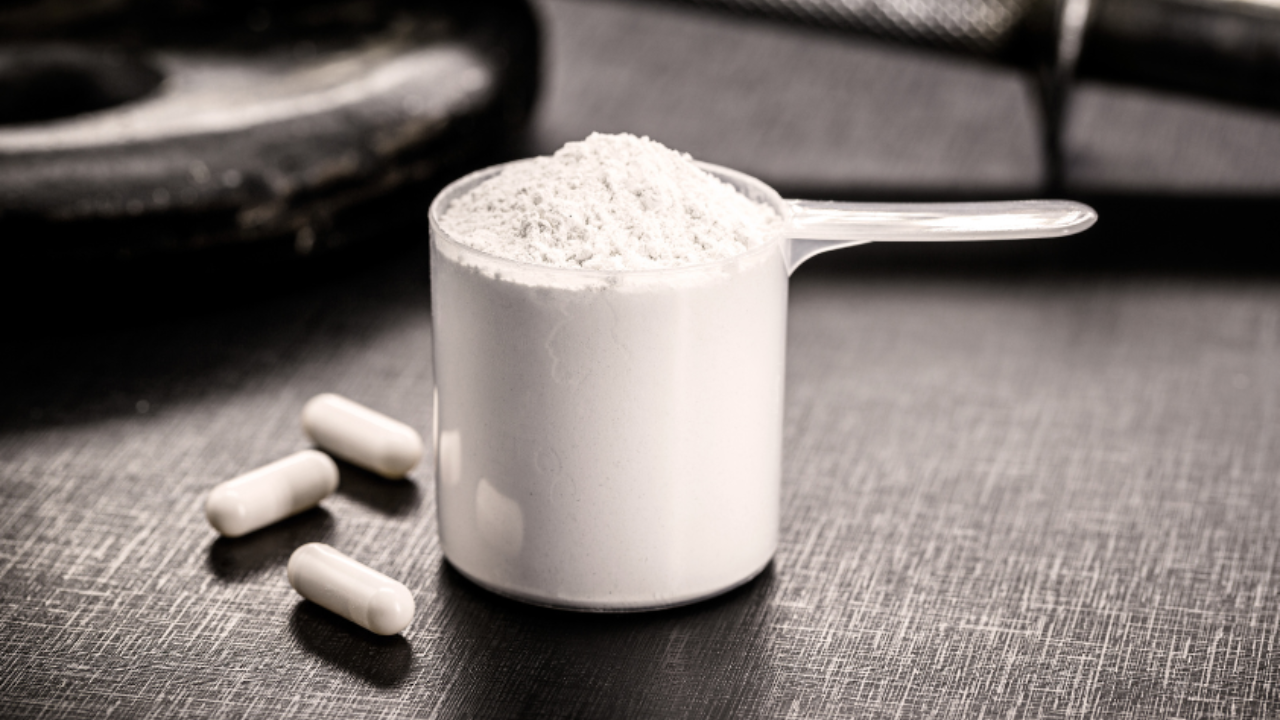
The short answer - YES! Especially for women who are active and women who are peri and post menopausal. As I have been participating in more continuing education in menopause, supplementation and exercise - I couldn't wait to share with you a little of what I have been learning in Stacy Sims' high level courses for Health Coaches! It's a "sciencey" post but please do not let that stop you... keep reading.
What is creatine?
Creatine is an amino acid derivative constructed from arginine, glycine and methionine. It is produced naturally by the body in the kidneys, liver, and pancreas at a rate of about 1-2 grams/day. Creatine can also be obtained from food (particularly red meat and fish) and supplementation.
The uptake of creatine into muscle cells is an active process. Most of the creatine in your body is found in muscle. Creatine is degraded into creatinine and excreted in the urine at a rate of around 2 grams/day.
Why is creatine important?
When I consider the use of supplements in my nutrition and supplementation plans I have to know WHY I am using and do I "need" it. Women who may like to consider supplementing are women who are exercising over one hour a day at least 5 days a week. Studies have shown that 3-5g of creatine daily can help to improve:
Creatine can help with strength, power and performance when doing:
-
Resistance training
-
Sprinting and HIIT
-
Plyometrics (fast, explosive movements that turn strength into power - like box jumps)
-
Repeated high-intensity efforts with short rest (like Tabata workouts)
Beyond supporting ATP production, phosphocreatine helps buffer hydrogen ions that accumulate during intense exercise. This can help to delay fatigue and allow you to sustain higher training quality.
Women experience equal or greater relative improvements, likely because our baseline creatine stores are lower. Research consistently shows improvements in: Maximal strength (think of it as your absolute limit—like the heaviest weight you can lift one time), power output, sprint performance, and training volume tolerance. None of this will lead to creatine making you bulk-up, but it will allow you to train harder and recover better. How your body adapts from there depends on your training, nutrition, recovery, and hormones (like where you're at in the reproductive continuum).
Creatine as a beneficial supplement for Perimenopause & Menopause
As estrogen levels decline in perimenopause and menopause, many women may experience:
-
Reduced neuromuscular* efficiency
-
Slower recovery
-
Increased muscle protein breakdown
-
Greater risk of sarcopenia (muscle loss & weakness) and bone loss
This is where creatine shifts from being a performance supplement to a foundational support nutrient. Research shows that postmenopausal women who supplement with creatine during resistance training gain more lean mass and strength than those who train without it. Larger trials also suggest creatine helps preserve muscle quality and training capacity as we age.
Creatine supports: Muscle protein synthesis, training intensity despite reduced recovery capacity, neuromuscular signaling* and structural components of bone (when paired with resistance training)
* Neuromuscular messaging is simply how your brain talks to your muscles so your body can move. Your brain is like a control center, your nerves are like electrical wires. Your muscles are the machines that do the work. When you decide to move—like lifting your arm—your brain sends an electrical signal down your nerves. That signal reaches the muscle and tells it to contract (tighten), which creates movement.
Creatine helps our bones too!
Bone responds to mechanical load, and creatine indirectly supports bone health by improving: muscle force production, training quality, and resistance training consistency.
Long-term studies in postmenopausal women show that creatine combined with resistance training can:
-
Preserve bone mineral density
-
Improve structural indicators of bone strength
-
Reduce age-related musculoskeletal decline
Creatine alone isn’t a bone supplement, but when integrated with lifting, it can meaningfully support skeletal health.
Creatine Can Improve Brain Health, Cognition, and Mood
Creatine is also found in the brain. The brain has high energy demands, and creatine can help support:
-
Cellular energy availability
-
Neurotransmitter balance
-
Cognitive resilience under stress
This 2023 review highlighted potential benefits of creatine for cognition, mood, and neurological health, particularly relevant for women. Research shows that women with major depressive disorder who added 5 grams of creatine a day to their standard antidepressant treatment, responded faster and achieved remission at higher rates.
Creatine may also help buffer mood disturbances during phases of the ovulatory cycle (i.e. the luteal phase) when hormone-driven neurotransmitter changes increase energy demand in the brain. Although research is ongoing, the evidence is strong enough to consider creatine a brain-supportive nutrient, not just a physical performance aid. This new review is another excellent resource on creatine and the brain.
What does this mean for you?
Using creatine could be a game changer for women who are very active and women who are active through peri & post menopause. Of course, you should always check with your practitioner when adding supplement to your plan. The recommended dosage of creatine is 3-5g daily. The most widely researched creatine is monohydrate. You want to use supplements that have been third-party tested by organizations like NSF or Informed Sport.
Dosing: There’s no real need to take more than 3-5 grams a day under normal circumstances, and if you’re unsure about that, start with just 1-2 grams. You can mix it into water, smoothies, oatmeal, or recovery drinks; it’s tasteless and easy to use. This one from Thorne is one I have personally tried and have seen results within 3 weeks of use. DO NOT mix into hot coffee the heat and the acid will turn it into creatinine and you definitely do not want more of that! (Creatinine is a waste product formed from the breakdown of creatine!)
Portions of this post resourced from Stacy Sims - drstacysims.com
Stay connected with news and updates!
Join the Integrated Catholic Woman Community and receive the latest news and updates, as well as special member discounts.
We hate SPAM. We will never sell your information, for any reason.